
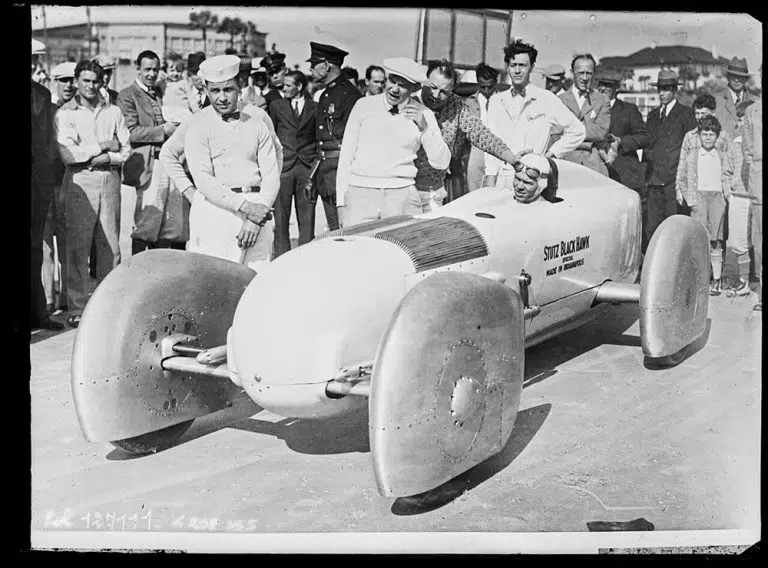
The Stutz Blackhawk name represents two distinctive vehicles that made a mark in automotive history: the original 1929–1930 model by the Stutz Motor Company, and the extravagant 1971–1987 revival by Stutz Motor Car of America.
Known for combining bold styling with high performance, the Blackhawk has become an icon of both early American engineering and late 20th-century opulence.
From its freestanding headlamps and teardrop trunk design to its celebrity clientele and handcrafted interiors, the Blackhawk continues to fascinate collectors and enthusiasts.
Key Takeaways
- Two Distinct Models: The name Stutz Blackhawk refers to two different cars—one from 1929–1930 by the original Stutz Motor Company, and a revived luxury model (1971–1987) by Stutz Motor Car of America.
- 1929 Blackhawk Specs: The original Blackhawk featured a six-cylinder or straight-eight engine, producing up to 95 horsepower, and was aimed at offering affordable performance during the late 1920s.
- 1971 Blackhawk Revival: The modern Blackhawk was built on Pontiac Grand Prix running gear, powered by a 7.5L V8 delivering 425 horsepower, with luxurious details like Connolly leather and 24-carat gold trim.
- Celebrity Ownership: The 1970s Blackhawk was famously owned by Elvis Presley, Frank Sinatra, and the Shah of Iran, adding to its cultural prestige.
- Collector Value: While the original 1929 models are rare vintage cars, the 1971–1987 Blackhawks have become iconic collector’s items, often selling for over $100,000 depending on condition and provenance.
A Brief History of the Stutz Blackhawk
The original Stutz Blackhawk, introduced in 1929, was designed to offer a performance-focused companion to the luxury Stutz Bearcat. Featuring the company’s straight-eight “Vertical Eight” engine, the Blackhawk delivered up to 156 horsepower and used innovative chassis designs for superior handling. Unfortunately, production was cut short by the Great Depression, with the company ceasing operations in 1935.
In 1971, the Stutz Motor Car of America, founded by James O’Donnell and designed by Virgil Exner, resurrected the Blackhawk nameplate. This neo-classic coupe was built for prestige, combining General Motors mechanicals with bespoke styling, Italian coachwork, and lavish interiors. It remained in limited production until 1987.
Design and Engineering Excellence
View this post on Instagram
The 1971–1987 Stutz Blackhawk was engineered for both presence and power. Built on a Pontiac Grand Prix chassis, it featured:
- A 7.5L (455 cu in) V8 engine producing up to 425 hp.
- Handbuilt Italian bodywork from Carrozzeria Padane (and later Saturn of Italy).
- Connolly leather seats, burled walnut dashboards, and 24-carat gold-plated trim.
- Signature features such as freestanding headlamps, outward-mounted spare tire, and an elongated, retro-styled hood.
The vehicle’s overall length exceeded 19 feet, contributing to its commanding road presence.
Special Features of the Blackhawk
The Stutz Blackhawk name adorned two very different yet equally remarkable vehicles. The 1929 original, born in the golden age of motoring, was a blend of lightweight construction and engineering elegance, featuring a straight-eight engine and a fabric-over-wood body.
| Feature | 1929 Blackhawk | 1971 Blackhawk |
|---|---|---|
| Engine | Straight-eight, up to 156 hp | 7.5L (455 cu in) V8, up to 425 hp |
| Construction | Weymann fabric-over-wood body | Hand-built Italian steel body |
| Interior Finishes | Leather seats, functional design | Connolly leather, walnut trim, 24-carat gold accents |
| Roof Design | Traditional convertible or coupe | Brushed stainless-steel roof (early models) |
| Lighting | Zeiss headlamps | Freestanding headlamps |
| Transmission | Four-speed manual gearbox | GM automatic transmission |
| Distinctive Features | Rumble seat, dual side-mount spare tires | Trunk-mounted spare tire, custom-signed dashboards |
| Design Focus | Lightweight sport-luxury for performance | Ultra-luxury neoclassic cruiser for prestige |
By contrast, the 1971 revival embodied opulence and celebrity appeal, outfitted with lavish finishes, gold-plated trim, and a trunk-mounted spare wheel that became a design signature.
Each model reflected its era’s priorities—performance and innovation in the 1920s, and luxury and exclusivity in the 1970s.
Performance and Driving Experience
The 1971 Blackhawk delivered a remarkable blend of luxury and performance:
- 0–60 mph in 8.4 seconds, rare for its class in the early 1970s
- Smooth driving dynamics thanks to Pontiac’s Grand Prix underpinnings
- High-speed touring capabilities despite its size and weight
- Overhead cam design (1929 engine) and later flathead V8s offered different driving character
While the 1929 Blackhawk emphasized agility and early performance engineering, the 1971 revival prioritized opulent cruising and prestige.
Pricing and Market Value
The Blackhawk’s pricing reflected its premium market position:
| Model Year | MSRP (USD) | Current Collector Value (Approx.) | Notable Sales |
|---|---|---|---|
| 1929 Blackhawk | $2,345 | $50,000–$150,000+ (rare models) | Model M Supercharged sold for ~$150k |
| 1971 Blackhawk | $22,500 | $80,000–$120,000 | Elvis’s car sold for $26,500 (1970) |
| 1976 Blackhawk | $47,500 | $100,000+ (celebrity-owned units) | Shah of Iran reportedly owned 12 |
The limited production of both generations has kept interest high among collectors.
Notable Owners and Cultural Impact
View this post on Instagram
The Stutz Blackhawk gained global attention largely due to its high-profile owners:
- Elvis Presley famously bought one of the first models and eventually owned several.
- Other owners included Frank Sinatra, Dean Martin, Lucille Ball, and Sammy Davis Jr.
- The Shah of Iran ordered 12 Blackhawks for his personal fleet.
- The car appeared in films such as The Man Who Loved Women and Gone in 60 Seconds, cementing its place in pop culture.
These associations elevated the Blackhawk beyond a luxury car—it became a symbol of prestige and individuality.
Challenges and Legacy of the Stutz Blackhawk
Adding to its historical significance, the Stutz Blackhawk was developed during a time when General Motors was pioneering many automotive innovations, reflecting a period of intense competition and technological advancement in the car industry.
