
The Carroll Six was a short-lived but ambitious American luxury car built in Lorain, Ohio, from 1920 to 1922. Created by Charles F. Carroll, this vehicle featured advanced styling, upscale interiors, and unique engineering, including a rear-set radiator.
Despite its innovative elements and elegant finishes, the car’s journey was cut short due to logistical mishaps and financial difficulties. Only one known example survives today, making the Carroll Six a rare artifact in automotive history.
Key Takeaways
- Short-Lived Production: The Carroll Six was manufactured by the Carroll Automobile Company in Lorain, Ohio, from 1920 to 1922, with an estimated production of only 183 to 600 units.
- Distinctive Design: It featured a unique radiator placement 7.5 inches behind the front axle, along with luxurious interiors that included Spanish leather upholstery and a California top with an opera window.
- Engineering and Assembly: The vehicle was powered by a Buda 66-hp engine and built using parts from multiple suppliers, allowing semi-customized builds but complicating production logistics.
- Economic and Operational Challenges: Engine damage during shipping and the early 1920s economic downturn led to financial losses, forcing the company into bankruptcy by 1923.
- Surviving Legacy: Only one known Carroll Six survives today, preserved at the William E. Swigart Jr. Antique Automobile Museum, serving as a rare reminder of early 20th-century luxury car innovation.
Origins of the Carroll Automobile Company
Founded in 1920 by Charles F. Carroll, a successful advertising executive, the Carroll Automobile Company set up operations in a former brass works building on Washington Avenue in Lorain, Ohio. Carroll’s goal was to enter the luxury car market by sourcing high-quality parts from various manufacturers and assembling them into a customizable premium vehicle.
Despite this modular strategy, the company faced logistical challenges and produced only between 183 and 600 units before shutting down operations in 1922.
The Vision of Charles F. Carroll
Charles F. Carroll envisioned a distinctive luxury car that would rival more established marques. He introduced the Carroll Six in two body styles: a two-passenger roadster and a five-passenger touring sedan.
One of the vehicle’s standout engineering features was its radiator placement, positioned 7.5 inches behind the front axle, giving the car a unique profile.
Around the same time, General Motors, known for acquiring and managing various car brands, shares a similar history of diversification and innovation in the automobile industry.
Unique Features of the Carroll Six
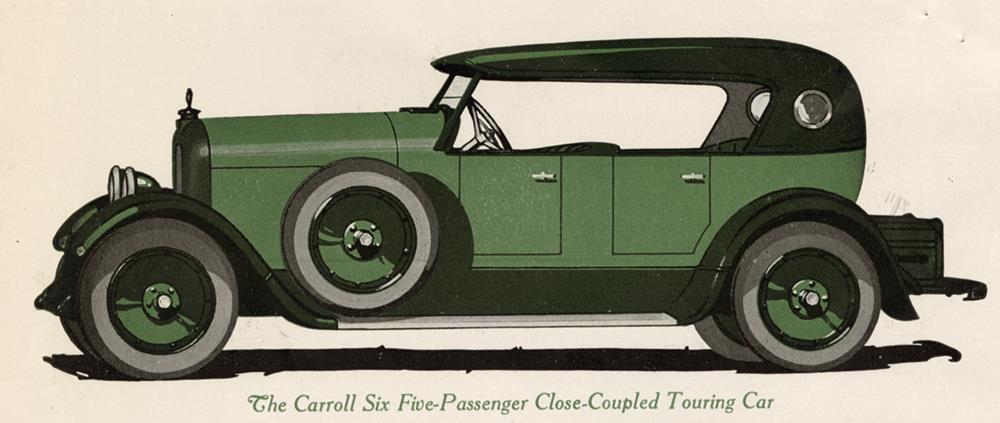
The Carroll Six emphasized both performance and luxury. Key characteristics included:
- A 128-inch wheelbase for a stable and smooth ride
- Spanish leather upholstery and premium accessories
- A black leather California top with opera windows (touring sedan)
- A raked windshield with a bronze frame and movable upper section
- Finishes in exclusive colors like Carroll Green and Burgundy Red
Manufacturing Process and Challenges
Charles F. Carroll’s vision of building a luxury automobile relied heavily on outsourcing key components from various suppliers. Among these were 66-horsepower Buda six-cylinder engines and Warner transmissions, which were integrated into the final product at the company’s facility in Lorain, Ohio.
While this approach allowed for some degree of customization, it also introduced logistical complications and made quality control difficult to maintain.
A major setback occurred when several units were shipped to California without adequate radiator fluid, resulting in engine block damage during transit. These cars arrived inoperable and were subsequently scrapped, dealing a serious financial blow to the company.
Design and Aesthetic Appeal
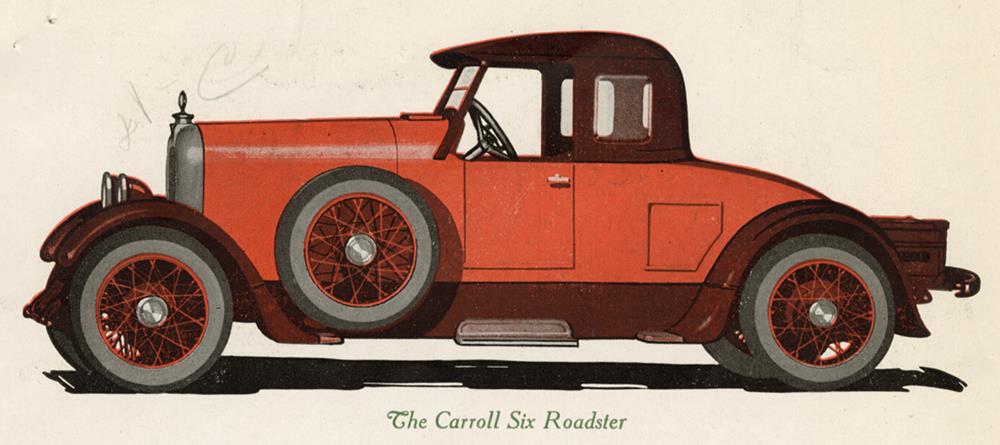
The Carroll Six distinguished itself in the luxury market not only through engineering but also through refined design. One of its most notable features was the radiator placement, positioned 7.5 inches behind the front axle. This configuration gave the car a clean, uninterrupted front-end profile, a rarity at the time, and contributed to its modern, forward-thinking appearance.
The vehicle’s coachwork was marked by elegant lines, a raked windshield, and intricate bronze detailing—all features that spoke to its luxury positioning. Inside, the Carroll Six was outfitted with Spanish leather upholstery and premium accessories, reinforcing its status as a premium vehicle aimed at upper-class buyers.
Whether in Carroll Green or Burgundy Red, the two-tone exterior color options added to the vehicle’s visual appeal. In a market crowded with utilitarian designs, the Carroll Six offered a compelling alternative with its styling that echoed post-World War I sophistication and aesthetic ambition.
The Market Response and Pricing Strategy
At a base price of $3,885, the Carroll Six targeted the luxury car segment. Despite its elegant features and semi-custom build, the vehicle struggled to find buyers. Production missteps and economic instability made it difficult for the company to compete with mass-production giants like Ford or Buick.
The Demise of the Carroll Six
Production ended in 1922, just two years after its debut. Cars sent to California were damaged during transport and scrapped, further accelerating the brand’s collapse.
The post-WWI recession severely affected smaller automakers like Carroll. Supply chain issues, inadequate quality control (e.g., the radiator fluid oversight), and diminishing demand contributed to financial losses.
Despite attempts to revive operations or secure acquisitions (e.g., Moon Automobile Company), the Carroll Automobile Company closed permanently in 1923.
Legacy and Historical Significance
| Year | Event |
|---|---|
| 1920 | Carroll Automobile Company founded in Lorain, Ohio; Carroll Six introduced |
| 1921 | Production continues; quality control and logistics issues emerge |
| 1922 | Production ceases due to economic and mechanical setbacks |
| 1923 | Company files for bankruptcy and closes permanently |
| Present | One surviving unit is displayed at the William E. Swigart Jr. Antique Automobile Museum |
The Carroll Six remains a rare example of early American luxury car innovation. With just one known surviving model, it offers a glimpse into the ambition of independent automakers during the 1920s. Its unique engineering—especially the rear-mounted radiator—and upscale features underscore a bold, if ultimately short-lived, chapter in U.S. automotive history.
