

The Auburn Automobile Company, founded in 1900 in Auburn, Indiana, rose from a local carriage-building operation to become a renowned name in American luxury performance vehicles.
Best known for producing the striking Boattail Speedster, Auburn stood out in the 1920s and 1930s for its blend of bold design, powerful engines, and advanced engineering. Though its run was cut short in the Great Depression, Auburn’s cars remain icons of American automotive craftsmanship.
Key Takeaways
- Founded in 1900 in Auburn, Indiana, the Auburn Automobile Company transitioned from carriage building to producing stylish, high-performance vehicles, becoming a major player in the luxury car market of the 1920s and 1930s.
- Under the leadership of Errett Lobban Cord, who took control in 1924, Auburn underwent a dramatic revival, introducing bold designs and powerful engines, and later integrating into the Auburn-Cord-Duesenberg trio of luxury brands.
- Auburn’s most iconic model, the 1935–36 Boattail Speedster, designed by Gordon Buehrig, featured a teardrop body and a Lycoming straight-eight engine capable of 100+ mph, a bold performance claim for its era.
- The company was known for offering V12-powered cars, advanced features like Columbia dual-ratio rear axles, and a striking Art Deco design language, setting it apart from competitors during the Great Depression.
- Despite its innovation and flair, Auburn ceased production in 1937 due to economic pressures, but its cars remain highly collectible, with enduring influence on classic car culture and American automotive design heritage.
The Origins of Auburn Automobile Co
Originally established by Charles Eckhart, a successful carriage manufacturer, the company transitioned into automobile production as the motor age dawned. By 1909, Auburn had consolidated with other small manufacturers to expand capacity and diversify its offerings.
The pivotal transformation came in 1924 when the struggling company was acquired by Errett Lobban Cord, a young and ambitious entrepreneur. Under Cord’s leadership, Auburn revitalized its product line and focused on high-performance, well-styled vehicles at competitive prices.
Cord would later oversee the creation of the Auburn-Cord-Duesenberg (ACD) group, uniting three of America’s most prestigious automotive marques.
Design Innovations and Engineering Milestones
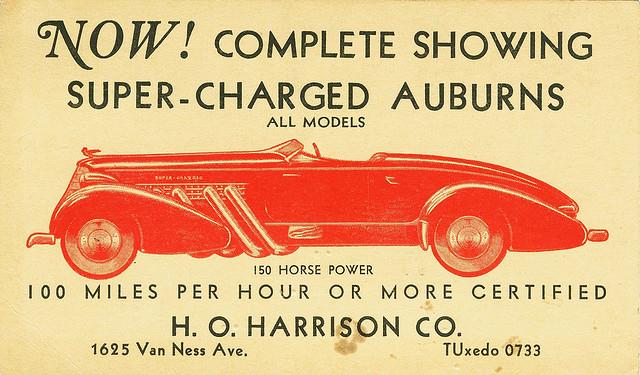
Auburn quickly became known for its daring design and mechanical innovation, standing in sharp contrast to the more utilitarian offerings of mass-market manufacturers like Ford. The brand emphasized:
- Streamlined bodies, often with Art Deco flair
- Powerful straight-eight and V12 engines
- Use of Lycoming engines, which were sourced from a sister company also under Cord’s control
- Introduction of features like the Columbia dual-ratio rear axle, which offered two-speed gearing for both performance and cruising efficiency
One of Auburn’s most celebrated models was the 1935 851 Speedster, capable of 100 mph—a performance feat backed by a factory-issued certificate. This kind of speed and style rivaled European contemporaries and cemented Auburn’s place in automotive history.
Iconic Models and Their Impact on Automotive Heritage
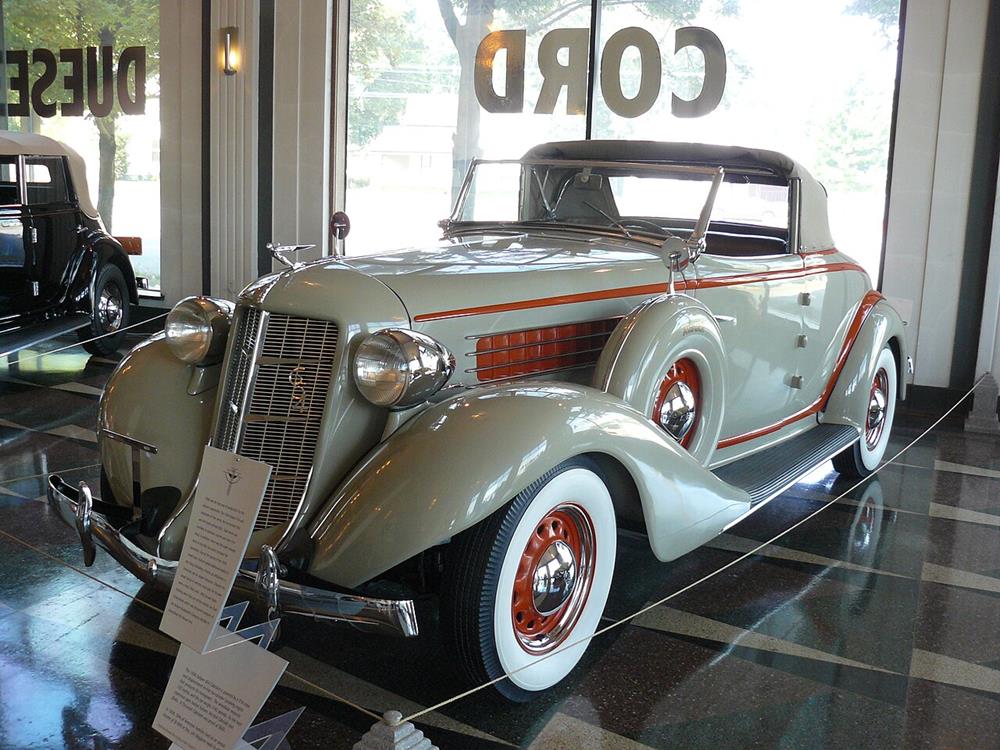
Throughout its history, the Auburn Automobile Company produced a wide range of vehicles that evolved from modest touring cars to some of the most advanced and stylish American automobiles of the prewar era. Below are highlights of Auburn’s most notable models, illustrating its progression in design, engineering, and prestige.
1904 Auburn Touring Car
The company’s early foray into motorized transport came with the 1904 Auburn touring car, a simple yet robust vehicle built during the brass era. Equipped with a flat-mounted single-cylinder engine producing 10 horsepower, the car featured a center-mounted engine, two-speed planetary transmission, and a tonneau configuration that seated two or four passengers.
Priced at $1,000 (roughly $34,996 in 2024 dollars), it had an angle-steel frame, half-elliptic springs, and weighed 1,500 lbs (680 kg)—a testament to the utilitarian engineering of its time.
The Duesenberg Collaboration and Model J
In 1926, under Errett Lobban Cord’s ownership, Auburn acquired the Duesenberg Corporation, famed for its racing pedigree. This acquisition gave birth to the Duesenberg Model J, launched in 1928, which was assembled by Duesenberg with custom coachwork often designed or selected by clients.
While not badged as Auburns, these cars were part of Cord’s broader strategy and represented the apex of American luxury and performance in the prewar period. Chief designer Gordon Buehrig styled roughly half of all Model Js built, marking a turning point in American automotive aesthetics.
Auburn 851 Speedster (1935–1936)
Designed by Gordon Buehrig and released in 1935, the Auburn 851 Speedster became one of the most iconic American cars of the era. It featured a boattail rear design, leftover from earlier models but modernized with teardrop streamlining.
Powered by a 4.6L Lycoming straight-eight, the supercharged version delivered up to 150 horsepower, allowing speeds in excess of 100 mph—an exceptional performance at the time. The car’s daring looks and guaranteed speed made it especially popular among Hollywood elites and wealthy thrill-seekers.
Cord 810/812 (1936–1937)
Originally envisioned as a “Baby Duesenberg,” the Cord 810, introduced in 1936, was also designed by Buehrig and represented a leap forward in styling and engineering. With its front-wheel drive layout, pop-up headlights, and coffin-nose design, the Cord 810 (and its 1937 successor, the 812) was one of the most revolutionary American cars ever made.
It gained widespread acclaim at the 1935 New York Auto Show for both its futuristic appearance and mechanical innovations. Though sold under the Cord brand, it shared Auburn’s legacy and E.L. Cord’s vision for high-tech luxury.
Other Auburn Models
Auburn also produced a range of more accessible luxury sedans and coupes during the 1920s and 1930s:
- Auburn 8-77 and 8-88: Mid-range models with eight-cylinder engines, offering good performance and upscale features at competitive prices.
- Auburn 8-Eighty-Eight Sedan: A refined family car balancing comfort and power.
- Model 12-160: Auburn’s luxury V12 line, introduced during the Depression, offering quiet performance and elegant design at a lower price point than competitors like Packard or Cadillac.
Together, these models reflect Auburn’s evolution from a modest regional manufacturer to a symbol of American automotive excellence. Their legacy endures in museums, collector circles, and the continued admiration of classic car enthusiasts around the world.
Regular maintenance, such as monitoring brake pads, is crucial to preserving the performance and longevity of these classic vehicles.
Peak and Decline of Auburn Cars
Auburn reached its peak in the late 1920s and early 1930s under the leadership of Errett Lobban Cord, who revitalized the brand with bold styling, strong performance, and affordable luxury. Cord’s acquisitions of Duesenberg and the launch of the Cord brand brought advanced engineering and design innovation, highlighted by iconic models like the 851 Speedster and Cord 810.
However, the Great Depression sharply reduced demand for luxury cars. Despite Auburn’s performance and design achievements, sales collapsed. Financial instability within Cord’s empire and stock manipulation scandals further undermined the company.
By 1937, Auburn ceased production. Its legacy lives on through its influential designs and the Auburn Cord Duesenberg Museum, housed in its original headquarters—now a National Historic Landmark.
Auburn’s Legacy in American Luxury Vehicles
Auburn’s commitment to merging high style with affordability was unique, particularly during the financial constraints of the Depression era.
Where Henry Ford revolutionized mass production, and General Motors focused on corporate integration and segmentation, Auburn emphasized distinctive design, performance, and exclusivity. Its vehicles were aspirational yet attainable, often priced lower than their appearance and engineering would suggest.
Today, Auburn automobiles are treasured by collectors and vintage car enthusiasts. Their styling, rarity, and racing capability have made them standouts in concours events and classic car auctions worldwide.
